Clear a Slow Drain Safely: Plunger and Auger Before Chemicals
A slow drain is your sink negotiating with you. The water pools around your ankles in the shower, the bathroom sink holds a swampy inch while you brush your teeth, the kitchen sink drains — eventually — with a sad little gurgle. It is tempting to grab the strongest bottle under the sink and pour the problem away, and this guide exists to talk you out of that, kindly, because for a slow drain (not a fully stopped one) the simple, mechanical fixes work better, cost less, and do not punish your pipes.
Slow drains are almost always caused by buildup close to the opening: hair and soap at the stopper, grease and food film in the kitchen, toothpaste and shaving gunk in the bathroom. Close means reachable. We will work in order — clean what you can touch, push with water pressure, pull with an auger — and save chemicals for a frank conversation at the end about why they are the last resort, not the first.
Tools & materials
- A bucket or bowl, old towels, and rubber gloves
- A screwdriver (for stoppers held by a screw) and a pair of needle-nose pliers or old tweezers
- A kettle or large pot for heating water
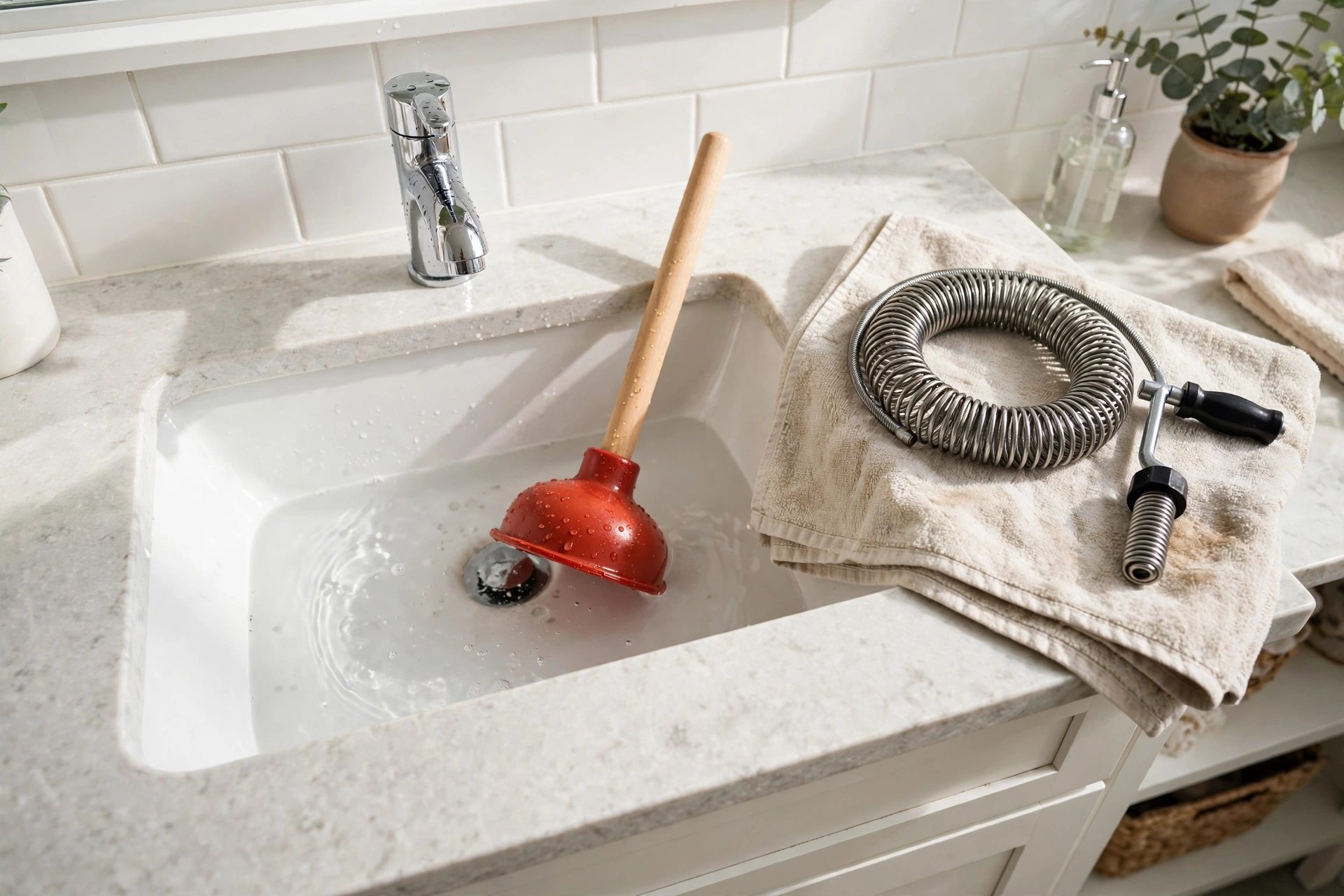
- A cup plunger for sinks and tubs — a simple flat-bottomed cup, the right shape for flat drain openings
- Petroleum jelly (for sealing the plunger cup)
- A hand auger / drain snake, around 15–25 feet, for clogs that sit deeper
- An enzyme-based drain maintenance cleaner for afterward
Notice what is not on this list yet: the caustic chemical opener. Keep it that way until you have read the last section.
Step by step: slowest, simplest first
- Remove and clean the stopper. This step alone fixes more slow bathroom sinks than everything else combined. Pop-up stoppers lift out or unscrew; others are held by a small screw or a rod under the sink you can release by hand. Pull the stopper and prepare yourself: it will likely be wearing a slimy wig of hair and soap. Wipe it clean with a paper towel (straight into the trash, not back down the drain), use the pliers to fish any visible gunk from the drain opening, and run the water. If it drains freely now, you are done — honestly, stop here and enjoy it.
- Use very hot water for a greasy kitchen sink. If the sink drains but sluggishly and the home eats real food, grease film is the usual suspect. Boil a kettle, then pour the water down the drain in two or three stages, letting each stage work its way through. This melts soft grease buildup off the pipe walls. Two limits, both important: only do this on a drain that is moving (hot water into a fully stopped drain just gives you a sink full of hot water), and skip it if your sink is porcelain and ice-cold, where sudden heat can be unkind — warm the basin first.
- Plunge — properly. Most plunging fails on technique, not effort. Fill the basin with enough water to cover the plunger cup. If it is a double kitchen sink, block the other drain with a wet cloth; on a bathroom sink, seal the overflow opening near the top of the basin with a wet cloth too — otherwise your pressure escapes there instead of pushing the clog. Smear a little petroleum jelly around the rim of the sink plunger cup so it seals tightly against the basin, position it flat over the drain, and plunge with firm, vertical strokes — push and pull, about fifteen to twenty times — keeping the seal unbroken. Lift, and watch. The clog often loosens in the pull stroke, and the water drops with a deeply satisfying whoosh.
- Bring in the hand auger. If plunging did not do it, the clog sits deeper or is tougher — time for a manual drain auger. Feed the cable into the drain slowly while turning the handle clockwise. When you feel resistance, you have found the clog or a bend; keep cranking gently and push a few inches at a time. When the cable bites into the clog, work it back and forth, then reel it out slowly — the clog often comes out on the end, which is gross and triumphant in equal measure. Wipe the cable as you retrieve it, run hot water for a minute, and repeat once if the flow is improved but not perfect.
- Finish with maintenance, not muscle. Once the drain runs clear, an enzyme drain cleaner used according to its directions helps digest the residual film that started the problem, and a monthly dose keeps slow buildup from re-forming. Enzymes are slow, gentle workers — they maintain a clear drain; they will not blast open a blocked one, and they do not pretend to.
About chemical drain openers: last, and cautiously
Chemical openers are the fix people reach for first and the one plumbers quietly wish they would not. Caustic openers generate heat and harsh fumes, they are hard on older metal pipes and on the seals and finishes they splash, and they turn a clog into a clog plus a basin of corrosive liquid that now has to go somewhere — often onto the hands of whoever runs an auger next. They also frequently fail on hair clogs, the most common kind, because the liquid finds a channel and drains past the hair without dissolving it.
If you ever do use one: one product only, exactly as labeled, never after another product, and never mix drain chemicals with each other or with anything else — mixed cleaners can react violently and produce dangerous gas. And if a chemical opener has already gone down a drain that is still clogged, tell the plumber you eventually call. That is essential safety information for them, not an embarrassment.
Common mistakes
- Plunging without sealing the overflow. All your effort whooshes out of the little hole near the rim. Wet cloth, every time.
- Skipping the stopper. People auger straight past a clog that was sitting, visible and removable, on the stopper itself.
- Pouring boiling water into a fully stopped sink. Now the clog has company, and the next steps are all harder.
- Cranking the auger like you are starting a lawnmower. Gentle, steady turning feeds the cable; force kinks it and can scratch the basin or trap.
- Reaching for chemicals first — and then plunging. Never plunge a basin containing chemical opener; splashing it is a genuine hazard. Mechanical first is also safer first.
How long it takes and how hard it is
Cleaning a stopper: ten minutes. Hot water: five. Plunging: ten, once you know the sealing trick. Augering a first drain: twenty to thirty minutes, including the learning curve and the cleanup. Total worst case, under an hour, with beginner skills and no part of the plumbing taken apart. This is firmly do-it-yourself territory — a slow drain is one of the most confidence-building repairs in a home.
When to call a pro
Call a plumber if the drain is fully stopped and neither plunging nor augering moves it; if several drains in the home are slow at once, or a toilet gurgles when the sink drains (that pattern points deeper into the system than a hand auger should chase); if you smell sewage persistently; or if the same drain clogs again within a few weeks of a thorough clearing. Recurring and multi-drain problems are not clogs — they are symptoms, and a pro with a camera can find the actual cause. And remember: anything involving taking apart pipes that will not go back together, or any clog you have already treated with chemicals, is a fair and sensible handoff.
Quick recap
- Clean the stopper first — it is the clog more often than you would believe.
- Hot water for grease, in a moving sink only.
- Plunge with the overflow sealed and the cup rim greased.
- Auger gently for deeper clogs; pull the clog out, do not just push it.
- Enzymes for maintenance. Chemicals last, never mixed, honestly more risk than rescue.
As an Amazon Associate, we earn from qualifying purchases.